Carlo Giuseppe Testore [c.1660-1716]
(カルロ・ジュゼッペ・テストーレ)
カルロ・ジュゼッペ・テストーレは、ミラノのメーカーの中でとても勤勉であり、最高の職人です。彼はジョバンニ・グランチーノの弟子であることから、作品にジョバンニ・グランチーノの影響を強く感じます。テストーレの楽器の一般的な特徴として、ミラノ派の低いアーチと独特なスクロールの形を持っています。
また、テストーレのニスは赤褐色の傾向があり、そのモデル(スタイル)と低いアーチは現代の演奏にも適しています。
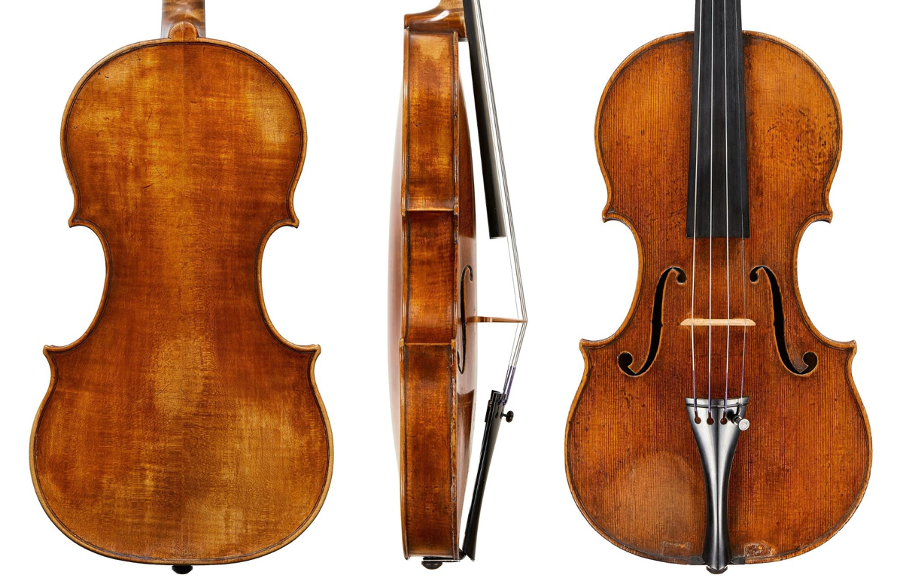
※画像はc.1710のカルロ・ジュゼッペ・テストーレ
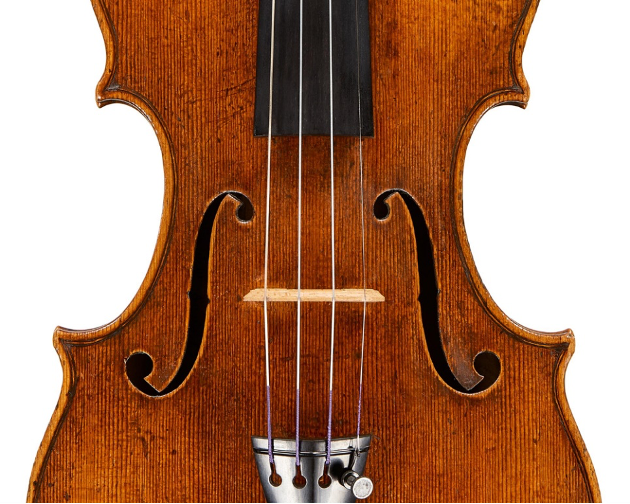
その特徴的な傾斜のf字孔はグランチーノを彷彿とさせますが、上下部の穴はそれよりも大きく、ウィング部に僅かなフレアが見られます。多くの点で、彼らは1710年~1720年代にクレモナで出現するであろうグゥアルネリスタイルのf字孔を予見し、先取りしていたようにも思えます。深く丸みを帯びたコーナーバウツは亮側にほぼ等しい半径のカーブを描いています。
※↓裏板のパフリング、大外のラインは元々のスクライブドパフリング。多くのテストーレはおそらく19世紀に従来のパフリングに置き換えられた。
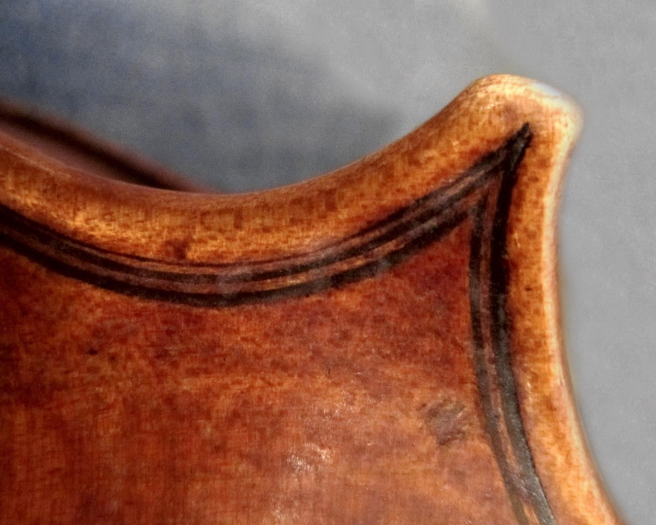
多くのテストーレの楽器は、裏板にスクライブド・パフリング(手書き)、表板に従来の3部構成のパフリングを使用して製作をされていました。手書きのパフリングは視覚的効果のみで構造的なサポートは全く期待できません。表板のスプルース材にパフリングを入れるより、裏板の堅いメイプル材にパフリングを入れるより時間がかかる点と、パフリングの重要性が裏板より、表板にあると考えていたとされています。
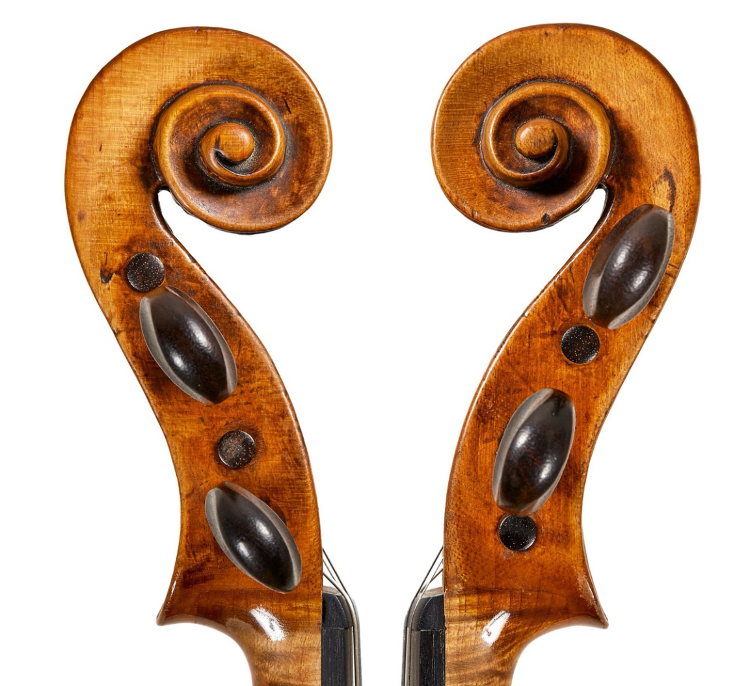
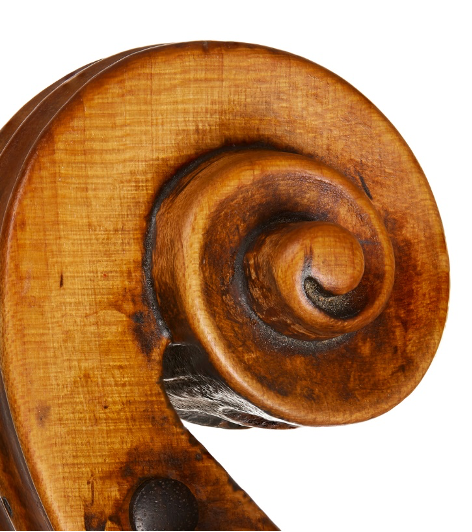
※特徴的な卵型のスクロール
典型的な卵型のテストーレのスクロールは前方に垂れ下がっているように見え、中央の小さな目によってより強調されています。
※スクロール下の溝(フルーティング)
フルーティングはスクロールの真下でストップしています。
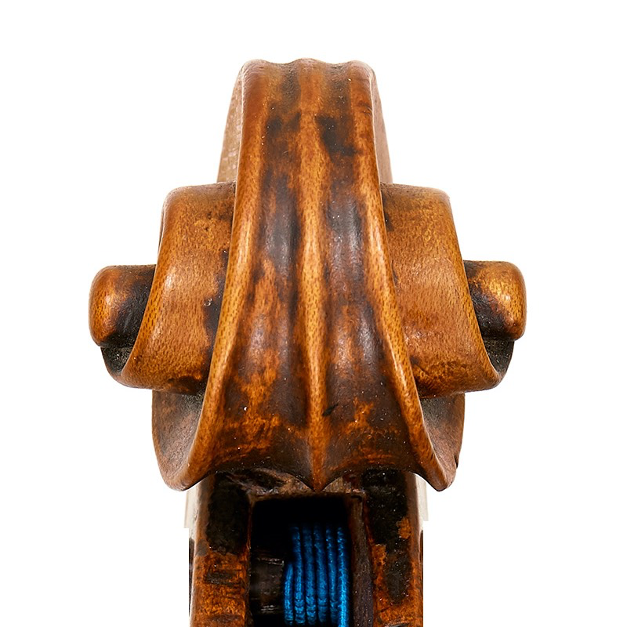
※2番目の渦巻きは耳を覆う。
3つのロールの内、2番目が1番目立ちます。細かい面取りは年齢とともに柔らかくなります。
令和4年3月14日
Carlo Giuseppe Testore
Milan 1690
㈱イズタ・バイオリン
TESTORE, CARLO GIUSEPPE
Born at Novara (Italy) 1660. Went to Milan about 1683. Worked with Grancino. Died 1738. The most conspicuous member of the family, but did not produce a very large number of instruments. Several of his Grancino-Amati models have been re-labelled, and sold as genuine Grancinos. Others have occasionally been attributed to Guarnerius. Modelling varies very considerably, but touches of Amati influence predominate. Generally of medium dimenslons, body length 13-3/4 inches, moderate arching. The slight slant in waist-curves foreshadow what is now known as the Guamerian. Occasionally wrought an elegatit and picturesque design but never reached ideality. Without being over-enthusiastic concerning the workmanship, we much acknowledge that it is strong and conscientious though never immaculate in finish. He needed stirring up after certain lapses into a kind of careless go-as-you-please spate, yet seemingly sure-handed style, and should have been encouraged to bestow more critical revision on what was so plainly excellent, and he could have easily stepped into artistry of refinement. Wood always more carefully chosen for tonal resonance rather than appearance. Backs seldom favoured with material other than that of a very slight figure, or quite plain, and this applies also to the ribs. Bellies sometimes of a broad mottled grain. Scrolls generally flat and pinched, but also of pretty swing. Sound-holes somewhat pointed, again foreshadowing the well-known characteristic of a Guarnerius. Purfling generally inaccurate, some unpurfled. Plainness of wood not especially enhanced with its covering of brownish-yellow or yellow with red-brown shading varnish, generally applied thinly and verging on the coldly dull. Tonal quality remarkably powerful, very spontaneous under the bow of a stroke-freedom soloist, far carrying and round, though its sympathetic qualities are sometimes questionable. Violas of medium arching, body length 15-3/4 inches, light golden-brown varnish, and finely free tone. ’Cellos almost invariably of pear-tree wood for backs, bellies of splendid tonal pine (even though a knot here and there sometimes exhibits itself), and bold scrolls of beech wood. Body length 29-1/4 inches, upper bouts 13-7/8; lower 17. Brown varnish with a slight yellow tinge. Also produced several basses of small model, all having a magnificent tone. Favourite instruments of several Italian virtuosi.
1660年ノバラ(イタリア)に生まれる。1683年頃にミラノに行き、グランチーノと共に働く。 1738 年に死去。家族の中で最も有名なメンバーですが、楽器の数はそれほど多くはありませんでした。彼のいくつかの Grancino-Amati モデルは再ラベル付けされ、本物の Grancinos として販売されています。グァルネリウスに起因するものもある。モデリングは大きく異なりますが、Amati の影響が優勢です。一般的に中程度のディメンスロン、体長 13-3/4 インチ、適度なアーチ。ウエストカーブのわずかな傾斜は、現在グアメリアンとして知られているものの前兆です。時折、優雅で絵のようなデザインを作り上げましたが、理想に到達することはありませんでした。仕上がりにこだわりすぎることなく、しっかりと丁寧に仕上げてありますが、しっかりと丁寧に仕上げていただいております。彼は、ある種の不注意なやりたい放題のスペートに陥った後、興奮をかき立てる必要があったが、一見確かなスタイルに見えた.そして、非常に明白に優れていたものにもっと批判的な修正を与えるよう奨励されるべきだった.そして彼は簡単にそうすることができた.洗練の芸術性に足を踏み入れました。木材は、外観よりも音の響きを重視して常に慎重に選択されています。背中は、非常に細い体型、または非常に単純なもの以外の素材で好まれることはめったになく、これは肋骨にも当てはまります.時には広いまだら模様のベリー。スクロールは一般的に平らでつまんでいますが、かなり揺れます。サウンドホールはやや尖っており、グァルネリウスのよく知られた特徴を再び暗示しています。パーフリングは一般的に不正確で、パーフリングされていないものもあります。木の無地は、赤茶色の陰影ニスで茶色がかった黄色または黄色を覆うことで特に強調されない.一般的に薄く塗られ、冷たく鈍い表面に集まっている.音の質は非常に強力で、ストロークのないソリストの弓の下で非常に自発的で、遠くまで運び、丸みを帯びていますが、その共鳴的な性質は時々疑わしいです.中程度のアーチ型のビオラ、体長 15-3/4 インチ、明るい金茶色のニス、きめの細かい自由な色調。チェロはほとんどの場合、背中に洋ナシの木、見事な色調の松の腹(あちこちに結び目が見られることがありますが)、そして大胆なブナの木の巻物です。体長 29-1/4 インチ、アッパー バウト 13-7/8;下 17. わずかに黄色味のある茶色のニス。小さなモデルのベースもいくつか製作しましたが、すべてが素晴らしい音色を持っています。複数のイタリアの巨匠のお気に入りの楽器。
————————————–
Carlo Giuseppe Testore allievo
di Gio. Grancino in Contrada
Larga di Milano, 1690
————————————–
————————————–
Carlo Giuseppe Testore in Con
trada larga di Milano, al
signo dell’ aquila, 1710
————————————–
Some instruments branded with the Royal Double-Eagle emblem around the label, mostly found in the ’cellos. Also occasionally branded on button at top of back. Violin dated 1708, body length 35.5 cm; upper bouts 16.8; lower 20.6; length of waist curves, 7.9. £650; ’cellos £800, 1960.