Gioffredo Cappa (Chiaffredo Cappa) [c.1653-1717]
ジョッフリィド・カッパ (キァッフリィド・カッパ)
「Violin Making in Turin(1650-1770)」の文献でフィリップ・カスが詳述しているように、ピエモンテ地方の初期のヴァイオリン製作者達は、他のイタリアの地方とは異なる影響を受けていました。当時、イタリア半島の大部分と同じくピエモンテ地方にも三十年戦争(1618-1648)により荒廃し追放されたドイツの弦楽器職人がいました。しかし、ピエモンテ特有の事情として、この地域はサヴォイア家の支配下にあったため、フランスとの政治的・文化的に強い繋がりがありました。したがって17世紀から18世紀初頭のピエモンテのヴァイオリンの製作方法はイタリアンスタイルではなく、北欧のスタイルが多いことに驚きはありません。(例・横板を裏板へはめ込み、ブロック無しのスルーネック等)
これらの初期のピエモンテの製作家の中にはトリノで働いていた人もいます。ドイツ生まれのエンリコ・カテナール、ピエモンテ生まれのファブリツィオ・センタ、アンドレア・ガット、ジョバンニ・フランチェスコ・セロニアトです。スピリット・ソルサナはクネオ、ジョッフリィド・カッパはトリノから南に約100kmの小さな町サルッツォで働いていました。
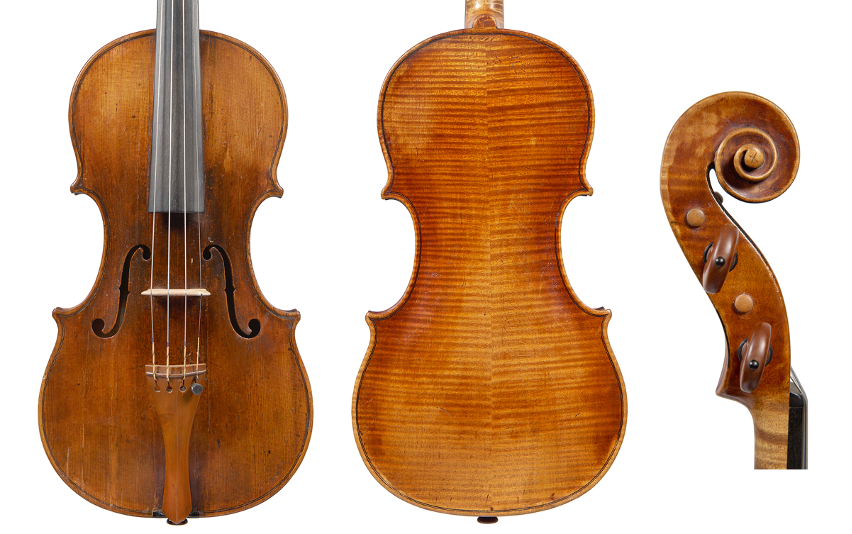
※ピエモンテの横板はめ込み法が用いられたジョッフリィド・カッパ
カッパはトリノのメーカーと呼ばれることもありますが、彼とトリノとの関係は未だ不明です。“1697年にトリノで製作“と記されたラベルのヴァイオリンはありますが、それがオリジナルのラベルかも分かりませんし、彼がトリノ市内にいたとされる他の証拠書類等は見つかっていません。
また、誰に製作を習っていたかも分かりません。彼の楽器は単純に表面的にはアマティーファミリーに似ていますが、アマティーの弟子と断言するにはより精査が必要です。確たる証拠がないのも一つの理由ですが、実際に楽器の製作法にも違いがみえます。
はっきりとしていることは、彼がサルッツォで人生の一部を過ごし1717年に亡くなったということだけです。
フェデリコ・サッキに聞いたところ、オラツィオ・ロッジェーロは1890年にサルッツォのアーカイブでカッパの死亡記録を発見。
「サルッツォの法廷弁護士であるロッジェーロは町の小教区の古い記録簿で、カッパな1647年に生まれ、1717年8月6日に死亡。」と。
(“Register for the Dead,” vol. v., page 139, in the Archives of the Cathedral.)より。
生まれ年は1647年が濃厚ではありますが、未だ1653年や1644年など諸説あり確定はされていません。
最近ではフィリップ・カスは、カッパが亡くなる数日前に書いた「マエストロキァッフリィドカッパの遺言」を発見し、名前のスペルがGioffredoではなくサルッツォの守護聖人と同じ名前Chiaffredoであったことに驚いたそうです。サルッツォの税務記録によるとカッパはサンベルナルドの教区に住んでいたようです。
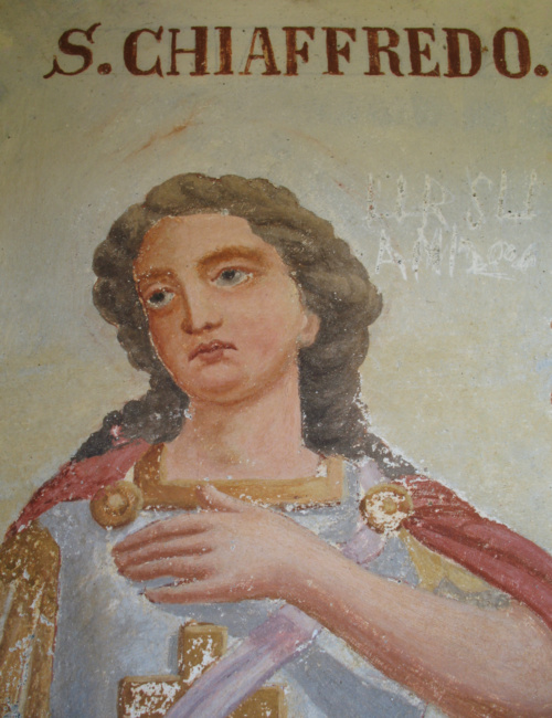
※オンチーノの奉納礼拝堂にあるサルッツォの守護聖人サン・キァッフリィドの画
1696年頃、カッパはサルッツォを離れ、南のほうにあるモンドヴィの町に向かったようです。(1697年製のカッパのチェロのラベルにMondoviの記載があることから)
この移動はスペイン継承戦争(1696-1713)におけるフランスのピエモンテ侵攻によるものと考えられています。この後のカッパの動きは不明ですが、法的文書によると1707年にサルッツォへ戻ったことが確認されています。その間にトリノに行った可能性もありますが、トリノはフランス主導の軍隊により包囲されていたためか国勢調査が甘く、1706年までカッパの記録を見つけることはできませんでした。
カッパの楽器を整理するうえでの問題の1つは、初期のピエモンテのヴァイオリンの多くはオリジナルのラベルがありません。これは悪意のある人により有名メーカーのラベルに貼り換えられて価値を上げて販売をされていたためです。カッパは主にアマティーのラベルが貼られていますが、中にはアンドレア・グァルネリのラベルが貼られたカッパも見つかっています。
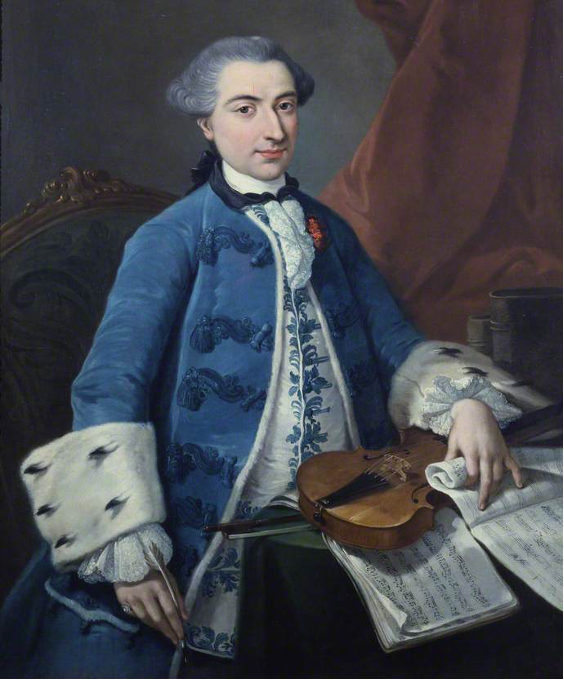
※ピエモンテの無名画家によるガエタノ・プニャーニ
ニコロ・パガニーニは、1823年6月付の友人ルイジ・ジェルミへ宛てた手紙の中でカッパのラベルの問題について次のように書いています。「あなたのアマティーはサルッツォのカッパです。プニャーニによりカッパのラベルはすべてアマティーにかえられたが、あなたは見つけることができない…彼の名前とあらゆるカッパを(?)・・」
ガエタノ・プニャーニは18世紀後半に活躍したトリノのヴァイオリニストであり、作曲家でした。当時は専門ディーラーではなく、プレイヤーや製作家が楽器の取引をすることが一般的であったため、プニャーニもラベルの貼り替えをせざるを得ない状況であったのかもしれません。当時、有名であったがためにプニャーニがやったと思われていますが、プニャーニが楽器を扱った時点ですでにラベルが貼りかえられていたとも考えられます。
コツィオ・デ・サラブエ伯爵はまた、カッパのオリジナルラベルが無いことを指摘し、回想録に次のように書かれています。「これまでオリジナルのラベルのカッパを見つけることができませんでした。特に古い楽器と特に最高の楽器にはアマティーのラベルが使用され、外国人にアマティーとして販売されました。」
コツィオは“Goffredo”か“Giacchino”のいずれかのラベルが貼られたカッパがあると指摘をしており、それらの初期のものはアマティーの弟子の時代ではないかと・・
カッパが複数人いたことを示唆する証拠はなく、また前途のようにアマティーに習った証拠もありません。しかしながら18世紀後半までに偽物のラベルではあるが、カッパのラベルがカッパに貼っている楽器もでてきたようです。これは単純にカッパの楽器が評価され始めたということです。コツィオは、カッパはアマティーの最高の模倣者の1人であり、その楽器を高額で買い取ったオランダやイギリスの人々から高く評価されていたと書いています。また、ジョバンニ・バティスタ・ヴィオッティにより使用されたことで人気は促進し、ヴィオッティの生徒らもカッパを演奏したようです。
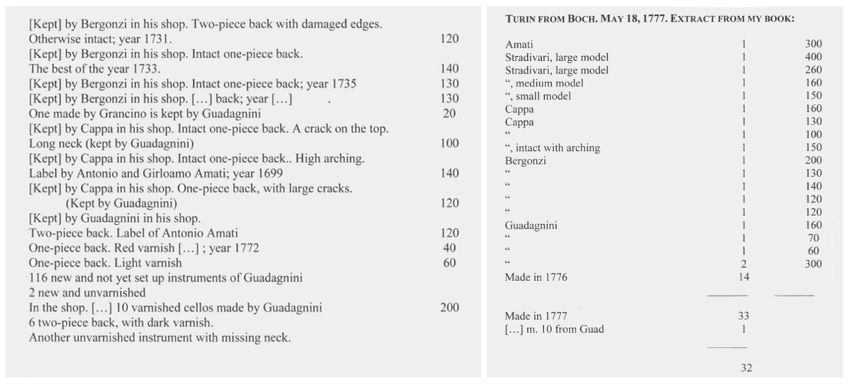
※コツィオ伯爵の在庫帳
1775年2月のコツィオ伯爵の楽器帳簿には、当時G.B.Guadagniniが扱った7つのカッパの楽器がリストにあります。コツィオ伯爵は1779年5月にGuadagniniと90ゼッキニのカッパ2本の修復と販売の契約を同意していました。帳簿の価格表から、20ゼッキニで取り扱われていたグランチーノ、120ゼッキニ以上のスタンダードなストラディヴァリ、このことから、相対的にカッパがどのような評価であったかが分かります。また1777年5月時点での価格表では、アマティー、ストラドに次ぐ価格はカッパとなっています。
カッパは、オリジナルのラベルが無いことに加え、印刷されたラベルを再度貼られた楽器があることからカッパの作品の真贋がより複雑になりました。ピエモンテの初期の製作家の中でも特に有名になったため、自身の楽器にアマティーのラベルが貼られたように、自身のラベルが悪用されてしまいました。しかし、その製作は一貫性があり、偽物がたくさんあっても見極めることができます。
ジオフレッド・カッパ (1644–1717)
1644年トリノ近郊のサルッツォ(Saluzzo)で生まれます。
トリノ派の初期のヴァイオリン製作者で、アマティ風の楽器を製作しました。
ニコロ・アマティ(Nicolo Amati 1596-1684)の弟子であったとする記載もありますが、チロル系の製作者でトリノに移り住んだエンリカス・カテナ―(Enricus Catenar b.c.1621-1701)や、トリノの弦楽器職人アンドレア・ガット(Andrea Gatto fl.1665-1679)などに影響を受けて弦楽器製作を始めたと考えられます。
丸みのあるアウトラインと、やや傾いたF字孔、クレモナを思わせる艶と深みの有るニスが特徴的です。
著名な演奏家であるパガニーニ(Nicolo Paganini 1782-1840)や、ヴィオッティ(Giovanni Battista Viotti1755-1824)がカッパの楽器を使用しました。
カッパのラベルは多くの製作者や修理人、楽器商に使用され、多くの偽物が流通する原因になりました。
その後トリノでは、カッパの影響を受けたソルサーナ(Spirito Sorsana fl.c.1714-1736)やセロニアート(Giovanni Francesco Celoniato fl.c1720-1760)、ガダニーニ・ファミリー(Guadagnini Family)によって弦楽器製作が続けられますが、徐々に衰退していきます。
19世紀初頭、プレッセンダ(Giovanni Francesco Pressenda 1777-1854)が登場することでトリノ派にはまったく新しい潮流が生まれていきます。
1717年(73歳) 死去。
Polemics of certain writers concerning the dates of this man’s career have been attended with wearisome prolixity. Some asserting that he worked as early as 1590, and that he studied with Antonio and Hieronymi Amati – also that he was born at Cremona and lived all his life there.
About the year 1890 a Dr. Orazio Roggiero set himself to investigate the pedigree of Cappa, and definitely found that death took place (at Saluzzo) in seventy-third year, 1717, thereby placing birth at 1644. Also that he was born at Saluzzo, was the son of Andrea, went to Cremona to have the advantage of Nicolò Amati’s experiences, and passed a brief sojourn in the Tyrol before finally settling at his native town, where the reigning Prince of Piedmont then resided, and who subsequently became a most influential patron of Cappa’s productivity.
Name greatly used by various label forgers of the past. Any nondescript violin bearing the slightest resemblance to an Amati, no matter what class of Workmanship, was elevated from its obscure position by insertion of a faked ‘Cappa’ label. Also his best work was frequently subjected to ‘Amati’ labels, thus depriving him of certain prestige. Furthermore it is stated by some experts that he himself occasionally deceived his patrons by deliberately replacing own label by that of Amati. Consequently there has been much controversy and considerable misrepresentation.
Two patterns – one of 13-7/8 body length, the other fully 14 inches or just slightly longer. Former of medium arching, the latter very little reduced below that. Both partake of Amatese characteristics up to a certain degree. Comparison of a Cappa with an Amati when placed side by side will probably give an impression of being reasonably alike – but looked at more carefully the second impression will be that there is scarcely a detail in which they do not somewhat differ.
Cappa outline not quite so graceful as the Amati owing to the upper bouts being slightly contracted in width. Arching more forcibly similar, and waist curves exact replicas. Ribs often rather narrow, particularly those of upper part. Correct designation of scroll puts Cappa in a very secondary place to his prototype, both in being less carefully finished, very prosaic in attitude, and often inordinately excavated at the lower part. Narrow peg box. Sound-holes generally have more firmness and delicacy of hand, and miss a certain severity by being set more obliquely than is customary with Amati – also long and narrow – but a few specimens have inelegant apertures, lack balance and measured symmetry, and seem sprawlingly large – also others too short. Purfling avowedly of inferior execution and loses all claim to accuracy.
Not consistent in choice of wood – belly wood sometimes of beautifully straight and narrow vein, other times quite coarse (said to be from trees growing in Piedmont), and occasionally material where the fibre is narrow at centre, and becomes wider when nearing the sides. Two-piece backs generally of close flame material, not unlike some of the Amatis – the figure when of one piece, slants upwards from left to right. Ribs sometimes of broader flame. Cremonese quality varnish – golden-yellow, golden-brown, and orange-red – applied with Amati effectiveness. Tonal quality of the smaller size models is not particularly charming or overwhelmingly brilliant, but it has a certain sweetness easy of production by amateurs, but rather dissatisfying to soloists. The larger and rarer models naturally have a more sonorous tone, but are never worthy of the exorbitant prices put up by dealers – the highest yet realized being 3,000 dollars for a specimen dated 1683 in the United States (1926). Pugnani and Viotti played on Cappas. Today’s price £450, exceptional specimens up to £800.
Few violas known, but they show extra-nice judgment in modelling, and have a clear tonal quality.
’Cellos generally of a fine concert tone. Originally built of very large proportions – possibly intended as bass viols – and many now reduced to normal size. Perfect relation between outline and arching, though occasionally the latter is a little overdone. Scrolls unequal in design and workmanship. Sound-holes often verge on the ugly. Purfling little better than the work of a semi-bungler. Gloriously transparent varnish.
Jofredvs Cappa fecit
Salutiis anno 1680
(square lettering – decorative border probably false)
Joffridus Cappa fecit
Salutiis anno 1692
Jofredus Cappa
in Saluzzo, fecit anno 1698
Sometimes dated as from Cremona. Instruments dated prior to 1665 not genuine. Many violins of the Tyrolese type with brown varnish have frequently been attributed to Cappa.